














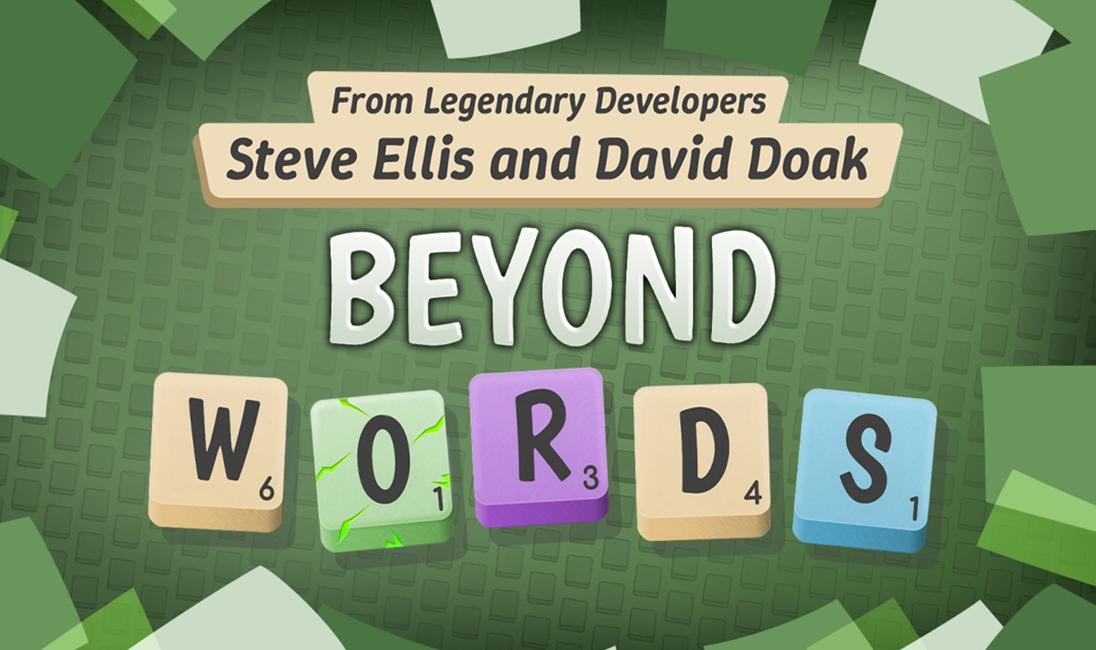
Okay, so here's the thing: I've always had a soft spot for word games. Always. But lately, it feels like everything's just... Scrabble clones. You know? Same old formula, different fonts. So when I heard about Beyond Words, a roguelike word game hitting PS5, Xbox Series, Switch, and PC, I perked up. Roguelike and word game? That's like chocolate and peanut butter for my brain.
But, wait a minute. Let's pump the brakes a little bit. Because what does "roguelike" even mean in this context? We'll dig into that. A lot of games throw the term around, but it rarely delivers on that true roguelike experience. Permadeath? Procedural generation? Brutal difficulty? We'll see.
Roguelike Word Game: A Genre Mashup Made in Heaven?
The core of any good roguelike, in my humble opinion, is the risk-reward system. Every decision matters. Every step could be your last. Now, imagine layering that tension onto a word game. Suddenly, every letter tile becomes a strategic choice. Are you going for the high-scoring word, even if it leaves you vulnerable? Or do you play it safe, sacrificing points for survival? It's a delicious dilemma.
And here's another thing I've been thinking about. One of the best parts about word games is the intellectual workout that it gives you. You're digging deep into your vocabulary, stretching your brain in ways you never expected. There are a lot of word games out there. Now, combine that with the strategic thinking of a roguelike, and you've got something truly special.
Beyond a Simple Vocabulary Game
But...it has to be done right. That's the tricky part. A lazy implementation would just be a word game with permadeath tacked on. The roguelike elements need to be integral to the experience. Think procedurally generated dictionaries, or enemies that attack based on the letters you use. Now we're talking. Think of Slay the Spire but with scrabble tiles instead of cards. That’s how you can turn simple puzzle gameplay into an exciting, strategic romp.
I initially thought that this idea of blending word games with roguelike elements was unique. But, actually, that's not quite right. There have been a few attempts before. However, none have really broken through to the mainstream. Beyond Words has the potential to change that, especially with its release on consoles. Think about it: reaching a whole new audience that might not typically play indie PC games.
Plus, consider the replayability factor. Roguelikes are, by their very nature, designed for multiple playthroughs. The procedural generation ensures that no two runs are ever the same. If Beyond Words can nail that aspect, it could have players hooked for months. Maybe even years. That's the dream, isn't it?
The Console Advantage
Let me try to explain this more clearly. Releasing on consoles (PS5, Xbox Series, and Switch) is a huge deal. It opens up the game to a much wider audience than it would have on PC alone. Console gamers are always hungry for something new and different. And a roguelike word game definitely fits that bill. You might be wondering if it will sell well. Well, considering console gamers have a huge appetite for games, then it might just be successful!
The Switch, in particular, seems like a perfect fit for this type of game. Imagine playing Beyond Words on the go, during your commute, or while waiting in line. The pick-up-and-play nature of both word games and roguelikes makes it ideal for portable play. I'm picturing myself curled up on the couch, Switch in hand, trying to survive just one more run. Sounds pretty good, doesn't it? Speaking of relaxing games, I am also a big fan of idle games.
But, there's a catch. (There's always a catch, isn't there?) The controls need to be tight. Word games often rely on precise input, and clunky controls can ruin the experience. The developers need to ensure that the console versions feel just as intuitive as the PC version. Maybe even more so.
FAQ: Decoding the Wordy Roguelike
What even is a "roguelike," anyway?
Okay, so picture this: You start a game, explore a procedurally generated world (meaning it's different every time), battle enemies, find cool items, and try to reach the end. But here's the kicker: if you die, you start all the way back at the beginning. No checkpoints, no continues. That's permadeath, baby! Roguelikes are known for their difficulty, strategic gameplay, and high replayability.
Will Beyond Words be too hard for casual players?
That's the million-dollar question, isn't it? Roguelikes can be notoriously unforgiving. But a good roguelike also offers a sense of progression, even if you're constantly dying. You learn from your mistakes, unlock new abilities, and gradually get better. Hopefully, Beyond Words will strike that balance, offering a challenge for hardcore players while still being accessible to newcomers.
Is Beyond Words just another Scrabble clone?
Hopefully not! The roguelike elements should set it apart. The procedural generation, permadeath, and strategic combat should create a unique experience that goes far beyond simply spelling words. The success of the game, honestly, hinges on this difference. If it's just Scrabble with a fresh coat of paint, it'll be a letdown.
How will the game balance vocabulary and strategy?
This is crucial. If the game focuses too much on obscure words, it'll alienate players. But if it's too easy, it'll be boring. The developers need to find that sweet spot where players are challenged to think creatively without being overwhelmed. Maybe incorporating different dictionaries or difficulty levels would help?
In conclusion, Beyond Words has the potential to be something truly special. A unique blend of genres that could appeal to a wide audience. But it needs to nail the execution. The roguelike elements need to be meaningful, the controls need to be tight, and the difficulty needs to be balanced. If it can pull all of that off, then we might just have a new classic on our hands. I, for one, am cautiously optimistic. And I can't wait to see what the future holds. Now, if you'll excuse me, I'm going to go brush up on my vocabulary.
- First important point about the content
- Second point with detailed explanation
- Another noteworthy detail
- Final concluding thought