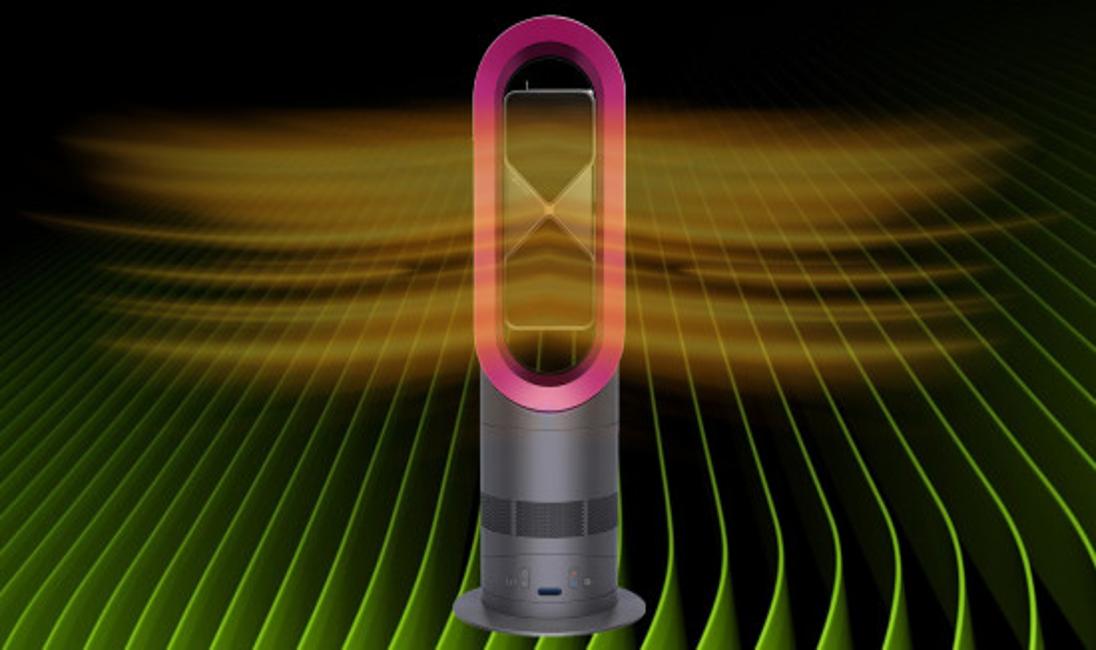
Okay, so you think you've seen it all in the PC modding world, right? Custom water loops that look like art, cases built into desks, fridges even. But then something truly wild drops, something that makes you just… scratch your head and blink a few times. Enter the tale of a modder who, with a dash of audacity and probably a healthy dose of disregard for their electricity bill, managed to turn an unreleased RTX 5090 into a bona fide 1,500-watt space heater. No, really. A 1,500W space heater! And look, while it’s a fascinating, almost mythological feat of raw power, let’s be super clear from the jump: home users, for the love of all that is holy, do not try this at home. Please.
I’ve been tinkering with PC hardware for, oh, coming up on fifteen years now, and the power creep in GPUs has always been a conversation. We’ve gone from cards sipping a mere 60-70 watts to what we have today, where a top-tier GPU alone can easily pull 450 watts or more under load. It's a lot. But 1,500 watts? That's not just "a lot," that's getting into serious industrial appliance territory. Think about it: your average microwave might hit 1,000-1,200 watts. An electric kettle? Maybe 1,500 watts for a few minutes. So, for a graphics card—even a next-gen monster like the rumored RTX 5090—to be intentionally pushed to that kind of sustained power draw? That’s not just overclocking; it's practically a power station in a PCB.
The Terrifying Allure of Raw Power
What drives someone to do something so… extreme? Part of it is undoubtedly the allure of pushing boundaries, seeing just how far the silicon can go. But there’s also a strange kind of logic to it, at least for a very specific, experimental context. This wasn't some casual "plug it in and see" moment. My guess? It involved custom cooling (and I mean custom, probably liquid nitrogen or something equally wild), a power supply unit that could literally run a small server rack, and a whole lot of engineering. Industry analysts have been speculating about the next generation of GPUs, including the RTX 5090, and while they predict higher power consumption, nobody is talking about 1,500W as a consumer standard. Not even close. It underscores, though, just how much raw, untapped potential might be lurking in these chips, waiting for someone to unlock it (safely, please, for everyone's sake).
Beyond Just Heat: The Real Dangers
And that’s the thing, isn’t it? Heat. A 1,500W output from a component the size of a graphics card isn’t just producing a bit of warmth; it’s generating an immense amount of energy that has to go somewhere. Mostly, it turns into heat. Enough heat, in fact, to literally change the temperature of a room. Which, well, is the definition of a space heater. But unlike a purpose-built space heater designed with safety cut-offs, proper insulation, and fire-resistant materials, a GPU is, by its very nature, a complex electronic component not meant for sustained high temperatures in an uncontrolled environment. The risks? Electrical fires, component meltdown, power supply failure, and a very real danger to your home and yourself. We’re talking about potentially melting cables, tripping circuit breakers, or worse. Seriously, folks, understanding electrical safety precautions around high-power electronics is absolutely crucial, especially when you start pushing things this far.
I keep coming back to this point because it’s crucial: the home electrical grid just isn’t built for this. A standard wall outlet in most regions is rated for 1,500 to 1,800 watts total. Running a 1,500W GPU means you can't run much else on that circuit without overloading it. You might be wondering, "But my gaming PC already uses a lot of power!" And yes, it does. But it’s usually in the 600-1000W range for the entire system, not just the GPU. This modder wasn't just building a gaming PC; they were building a controlled thermal experiment. An impressive one, sure, but dangerous if replicated without extreme expertise and precautions. Think about what your average 850W or 1000W PSU is already doing; imagine almost double that! It’s a whole different ballgame. Makes you almost want to go play some Sprunked! on a much less demanding setup, doesn't it?
RTX 5090 & Beyond: What We Can Expect (Realistically)
Now, let's bring it back to reality for a moment. What can we actually expect from the forthcoming RTX 5090? Well, it's highly unlikely it'll demand 1,500W out of the box. Nvidia has a knack for efficiency, even as performance scales. We’re more likely looking at power envelopes that build upon the current generation’s high-end, perhaps pushing 600-700W for extreme variants, maybe even a bit more. But crucially, these will be designed to run within those parameters safely, with robust cooling solutions and PSU recommendations that align with consumer-grade hardware. This modder’s stunt is a peek into the absolute limits of what’s possible with an unconstrained power budget and a complete disregard for practical home use, not a preview of your next graphics card’s spec sheet. It's a testament to raw engineering potential, I suppose, but also a stark warning about respecting the laws of physics and, you know, not burning your house down.
FAQs About High-Power GPUs
Can an RTX 5090 really act as a space heater?
Yes, any electronic component dissipates power as heat. Pushing a high-end GPU like the RTX 5090 to 1,500W makes it an incredibly effective, but dangerously inefficient, space heater.
Is it safe to push my GPU to its power limits?
Within manufacturer-specified limits and with adequate cooling, generally yes. Going beyond those, especially to extreme levels, is risky and can damage components or pose fire hazards.
What happens if I try to run a 1,500W GPU on a standard outlet?
You'll likely trip your circuit breaker, potentially overload your home's wiring, and risk damaging your PC components and creating a fire hazard.
Will the consumer RTX 5090 draw 1,500 watts?
No, absolutely not. The consumer RTX 5090 will have a significantly lower, and much safer, power draw designed for typical home setups, likely in the 600-700W range.
- First important point about the content
- Second point with detailed explanation
- Another noteworthy detail
- Final concluding thought